Sardar Vallabhbhai
Vidyalaya (SVV) started back in 1960 at Vadodara, Gujarat, India under Nutan Kelavani
Trust in Gujarati medium school with intention to serve quality education at affordable
fees.
Shri. Moraraji Bhai Desai (Ex- Prime Minister of India) inaugurated the SVV in 1960 and
the first Trustees of Nutan Kelavani Trust were reputed personality in the
fields.
Bhailal Bhai Contractor –
Chairman
Kantibhai Bhatt – Secretary
Chimanbhai Patel (Ex -Chief Minister of Gujarat)
Ramlal Parikh – Chancellor of Gujrat Vidhyapith.
Mehruben Palkhiwala – Principal of New Era Girls High School
Harshadbhai Desai – Freedom Fighter and Social worker.
The pillar and strength of
SVV is USHABEN SHROFF- Managing Trustee. She is devoted and working with passion and
zeal at the age 93 years and offering her services since last 64 years. Her core values
are simplicity, modesty, discipline, and lover for education which was inherited in
students of SVV which makes them completely different among others.
SVV is pioneer in introducing exam reforms viz. Objective Test back in 1964, Oral Test
for all subjects in third examination of the school, Prabodhika introduced in the year
1965 - a full year planning of education and co- curricular activities. Based on
Gandhian philosophy Khadi uniform was introduced back in 1964 and it was implemented for
Principal to peon.
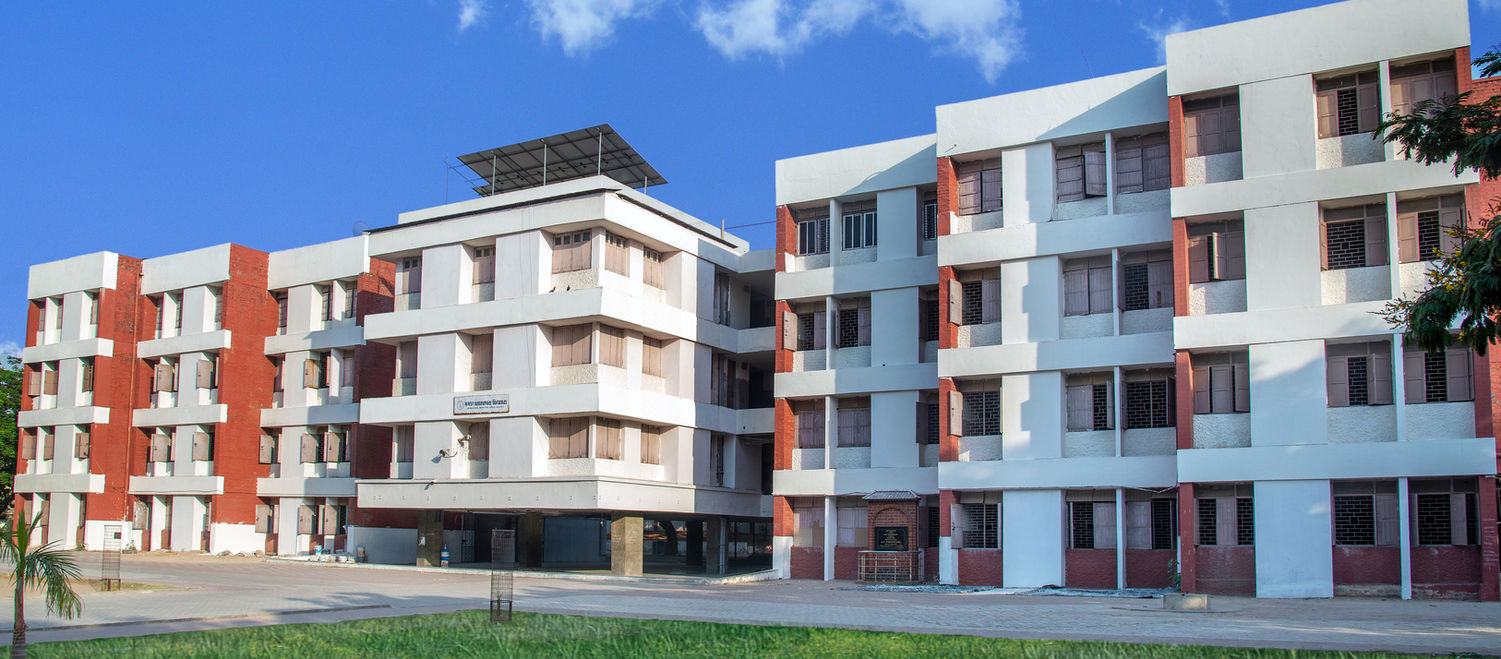
Presently SVV offering Primary, Secondary and Higher Secondary education in Commerce and Science. To offer high quality education SVV having facility which is required in modern education system viz. latest Science Laboratory, Computer Lab, Language Lab, Books Library. Class 9 th to 12 th supported by State Govt. grants and rest of the classes are managed by Nutan Kelavani Trust (self – Finance). Present strength is 46 classrooms with 2,500 students.
Present Trustees:
1. Ushaben Shroff - President
2. Krishnavadan Harikrishna Dave
3. Dr. Mandaben Ramanlal Parikh
4. Mr. Nagesh Malharrav Chavan
5. Dr. Kalpesh Govindlal Shah
Shri Kantibhai Sardar
Vallabhbhai was the first principal of Vidyalaya. School started with an empty
pocket. Mu. Morarjibhai gave some loan to the school from Sayaji Diamond and with
the financial cooperation and support of personal friends, the financial system of
the school was arranged. From the very first day of the school, the classrooms were
equipped with complete furniture, essential equipment and materials. Principal's
office, clerk's office, classrooms, laboratories and classrooms were all equipped.
No financial deficiency of any kind was allowed. Initially Mr. Kantibhai and two or
three senior teachers attached to him rendered unpaid service. In a short time,
apart from Mr. Kantibhai, two or three other teachers started being paid. But Mr.
Kantibhai did not take salary for almost two and a half years and even after his
death, the money of his two and a half year salary remained deposited and even today
it is deposited in the account books of the trust, such was his indifference. At
that time, the government paid 45% of the approved expenditure to the grant-seeking
schools and the remaining 55% was to be raised by the school itself. Teachers'
salaries are paid by the school.
The school was woven into the blood of Mr. Kantibhai. It became the main part of his
personal life. Wanted to develop the school as an experimental institution in
continuous education. Along with this, appropriate activities were organized in the
school to inculcate nationalism in the school students and imprint the precious
heritage of the proud Indian culture on their minds. He was equally trying to keep
the standard of education high.
Sardar School was woven into his very core. There was only one urge in his mind, how to develop the school further and further. Around the 80s, he had a strong desire to prepare a Language Laboratory in the school. In front of them was the English Institute of Hyderabad. This laboratory is equivalent to it. But this work was not completed due to lack of space in the school. But when a suitable place was created near the institute, the laboratory was built at a cost of about twelve and a half lakhs. Two years before his departure, his wish was to prepare a 'reading room' for the students where a whole class could sit in the reading room and read other books. But before the furniture for it was ready, he took a final farewell from all of us.


